

Most Arizona pools do not need to be drained on a routine schedule. Pool draining is usually considered when a specific repair, plumbing issue, water-condition problem, wash treatment, or other pool project makes removing the water necessary.
For homeowners in Goodyear, Surprise, and across the West Valley, the better question is not simply “How old is the water?” It is whether the condition of the pool, equipment, plumbing, water, or surface treatment actually requires draining as part of the solution.
Quick Answer
Most Arizona pools should be drained only when there is a clear repair, treatment, or water-condition reason to do so. Draining may be part of certain plumbing repairs, acid or chlorine wash treatments, severe mineral or water-condition problems, or projects that require access below the waterline.
City of Surprise guidance says it may be time to consider draining when total dissolved solids (TDS) exceed 1,500 ppm or calcium hardness exceeds 350 ppm, but those figures are local guidance, not a universal rule for every pool. Have the pool evaluated first and check your city or utility requirements before draining.
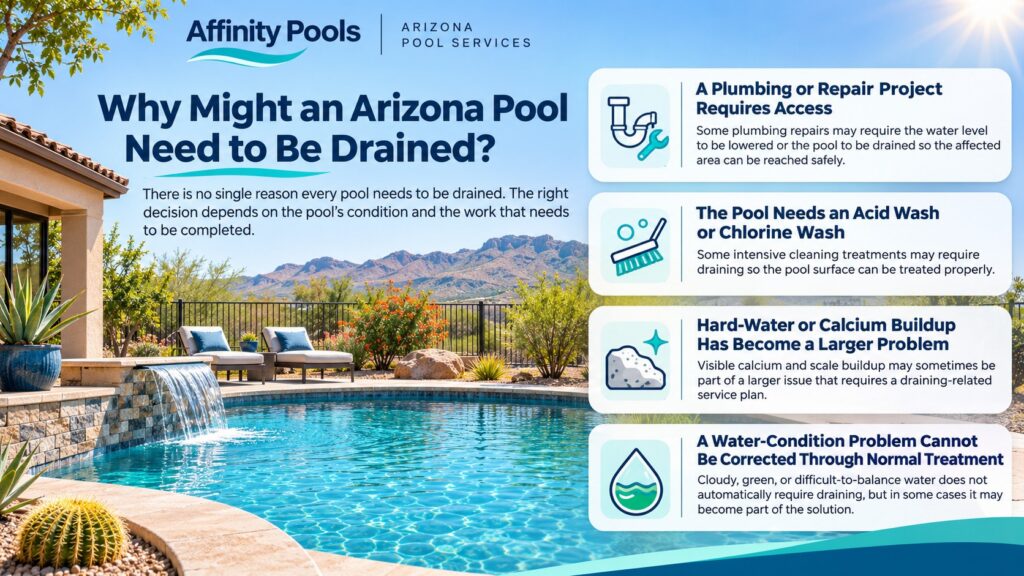
Why Might an Arizona Pool Need to Be Drained?
There is no single reason every pool needs to be drained. The right decision depends on what is happening with the pool and what work needs to be completed. In many cases, a repair or cleaning service can be performed without fully emptying the pool. In others, draining may be part of the most practical approach.
A Plumbing or Repair Project Requires Access
Certain pool plumbing repairs may require the water level to be lowered or the pool to be drained so the affected area can be reached safely. Problems involving suction or return lines, skimmer-related components, or other circulation issues should be diagnosed first so unnecessary draining can be avoided.
Affinity’s Pool Draining & Plumbing Repair service gives West Valley homeowners a direct path for evaluating these repair and draining needs.
The Pool Needs an Acid Wash or Chlorine Wash
An acid wash or chlorine wash is more intensive than routine pool cleaning. These treatments may require the pool to be drained so the surface can be treated properly. The correct treatment depends on the condition of the pool, so discoloration, algae, or staining should not automatically be treated as proof that an acid wash is necessary.
Affinity’s Pool Acid Wash & Chlorine Wash service explains these specialized treatment options in more detail.
Hard-Water or Calcium Buildup Has Become a Larger Problem
Arizona’s mineral-heavy water can contribute to visible calcium and scale buildup around the waterline and pool surfaces. Not every calcium line requires the entire pool to be drained. Some buildup may be handled through Hardwater Calcium Line Removal or Swimming Pool Tile Cleaning & Repair Services.
If the buildup is part of a broader water-condition or treatment issue, draining may become part of the recommended service plan. The important step is to identify the condition first instead of treating draining as the automatic solution.
A Water-Condition Problem Cannot Be Corrected Through Normal Treatment
Cloudy, green, or difficult-to-balance water does not automatically mean a pool should be drained. Many water problems can be addressed through testing, filtration, circulation correction, cleaning, or treatment.
When the water condition cannot be corrected through the appropriate normal steps, a pool professional may recommend partial or full draining depending on the specific problem. The decision should be based on the pool’s actual condition rather than a fixed calendar interval.
What Water Conditions Can Make Draining Worth Considering?
Water chemistry can be one factor in the decision to drain, but it should not be treated as a one-number rule for every pool. City of Surprise guidance says it may be time to consider draining if total dissolved solids (TDS) exceed 1,500 parts per million (ppm), or calcium hardness exceeds 350 ppm.
Those figures are local municipal guidance for Surprise, not universal thresholds for every pool, finish, or water source. Homeowners should check the pool chemistry, consider the condition of the surface and equipment, and consult a pool professional before deciding whether partial or full draining is appropriate.
When Is the Best Time to Drain a Pool in Arizona?
There is no single best month that applies to every Arizona pool. Timing depends on the repair or treatment being performed, the pool finish, weather conditions, and how long the pool may need to remain empty.
If draining is necessary, plan the work so the pool is not left empty longer than needed.
City of Surprise guidance advises refilling a drained pool as soon as possible because direct sunlight can damage exposed pool plaster. A professional can help coordinate the draining, repair or treatment, and refill process around the condition of the pool.
Does Cloudy or Green Pool Water Mean You Should Drain the Pool?
Usually, no. Cloudy or green water can have several causes, including filtration problems, reduced circulation, debris, water chemistry, or equipment issues. Draining the pool without identifying the cause may use a large amount of water without fixing the underlying problem.
Before draining, check whether the issue is connected to a pump, filter, plumbing, or another repair need. Affinity’s Pool Repair Services page is a good starting point when the problem may involve equipment or multiple pool systems.
If circulation appears to be part of the issue, the dedicated Pool Pump Repair and Pool Filter System & Repairs pages provide more specific service information.
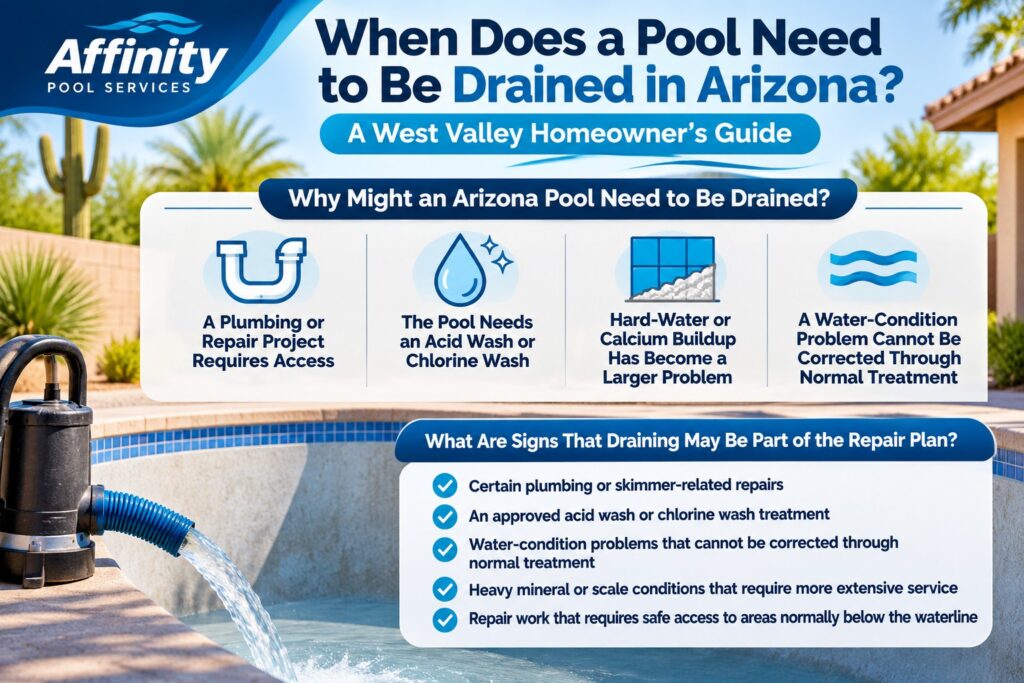
What Are Signs That Draining May Be Part of the Repair Plan?
A professional may consider draining when the work involves a repair or treatment that cannot reasonably be completed with the pool full.
Examples may include:
- Certain plumbing or skimmer-related repairs
- An approved acid wash or chlorine wash treatment
- Water-condition problems that cannot be corrected through normal treatment
- Heavy mineral or scale conditions that require more extensive service
- Repair work that requires safe access to areas normally below the waterline
These signs do not mean every pool must be emptied. They are reasons to have the pool evaluated so the right repair or treatment can be selected.
Why You Should Check Local Pool-Draining Rules First
Pool water should not simply be pumped into the street or storm drain. Local water and wastewater requirements can differ depending on the city and utility provider, so West Valley homeowners should confirm the rules that apply to their property before draining.
For Goodyear homeowners, the City of Goodyear publishes guidance for draining and backwashing pools legally, including directions for using an appropriate sanitary sewer clean-out and restrictions on allowing pool water to escape into a city street, other right-of-way, or another property.
The City of Surprise also provides pool-draining guidance through its water and wastewater resources. Its current guidance covers when draining may be considered, how to discharge pool water, and why a drained pool should be refilled promptly.
If you live outside these service areas, check with the city or utility provider that serves your property before draining.
Can You Drain a Pool Yourself?
Pool draining may look simple, but several practical issues need to be considered first. The discharge location and flow rate must be appropriate, local rules need to be followed, and the homeowner should avoid backups, runoff, or damage to neighboring property.
If you are unsure whether draining is needed or where the water can legally go, a pool professional or local utility can help confirm the correct approach. The goal should be to drain only when it serves a clear repair, treatment, or water-condition purpose.
How Pool Repair and Pool Draining Work Together
Pool draining is often not a stand-alone need. It can be one step within a larger repair or treatment project. That is why the best repair strategy begins with identifying the underlying problem.
For example, poor circulation may point to a pump, filter, or plumbing issue. A white line around the pool may call for calcium removal or tile cleaning. A treatment problem may lead to an acid wash or chlorine wash. Only after the issue is identified can the technician determine whether draining is necessary.
For Surprise homeowners, Affinity’s Pool Repair & Pool Draining in Surprise, AZ page provides a local overview of these services. Goodyear homeowners can also visit the Goodyear service-area page, while homeowners throughout the West Valley can start with the main Pool Repair Services hub.
Frequently Asked Questions About Pool Draining in Arizona
How often should an Arizona pool be drained?
There is no universal schedule that applies to every Arizona pool. Draining should be based on the condition of the pool, the water, and the work that needs to be performed. If the pool is operating normally and the water can be managed through appropriate treatment, routine calendar-based draining may not be necessary.
Do I need to drain my pool because of calcium buildup?
Not necessarily. Calcium and scale buildup may be addressed through hardwater calcium line removal or pool tile cleaning and repair. Draining may be considered when the buildup is part of a larger treatment or repair plan.
Does a pool need to be drained for an acid wash?
An acid wash generally requires access to the pool surface, so draining may be part of that service. The pool should be evaluated first to confirm that an acid wash is appropriate for the condition being treated.
Can I drain pool water into the street in Arizona?
Do not assume street or storm-drain discharge is allowed. Rules vary by city and utility provider. Goodyear, for example, publishes specific legal-draining guidance that restricts discharging pool water into city streets, rights-of-way, or another person’s property.
Who should I call if I am not sure whether my pool needs draining?
Start with a qualified pool professional who can evaluate the water condition, plumbing, equipment, tile, and other visible concerns. If draining is recommended, also confirm the disposal requirements with the city or utility that serves your property.
Need Pool Draining or Pool Repair in the West Valley?
If your pool has a plumbing issue, equipment problem, calcium buildup, difficult water condition, or a treatment need that may require draining, Affinity Pools can help you identify the appropriate next step.
Explore Pool Draining & Plumbing Repair, review Affinity’s Pool Repair Services, or visit the Surprise service-area page and Goodyear service-area page for local repair and draining information.
Useful Sources
- City of Surprise — Draining Your Pool or Spa the Right Way
- City of Surprise — Water Resource Management
- City of Goodyear — Drain and Backwash Pools Legally
These municipal resources are included for homeowner reference. Local requirements can change, so verify current city or utility guidance before draining a pool.